
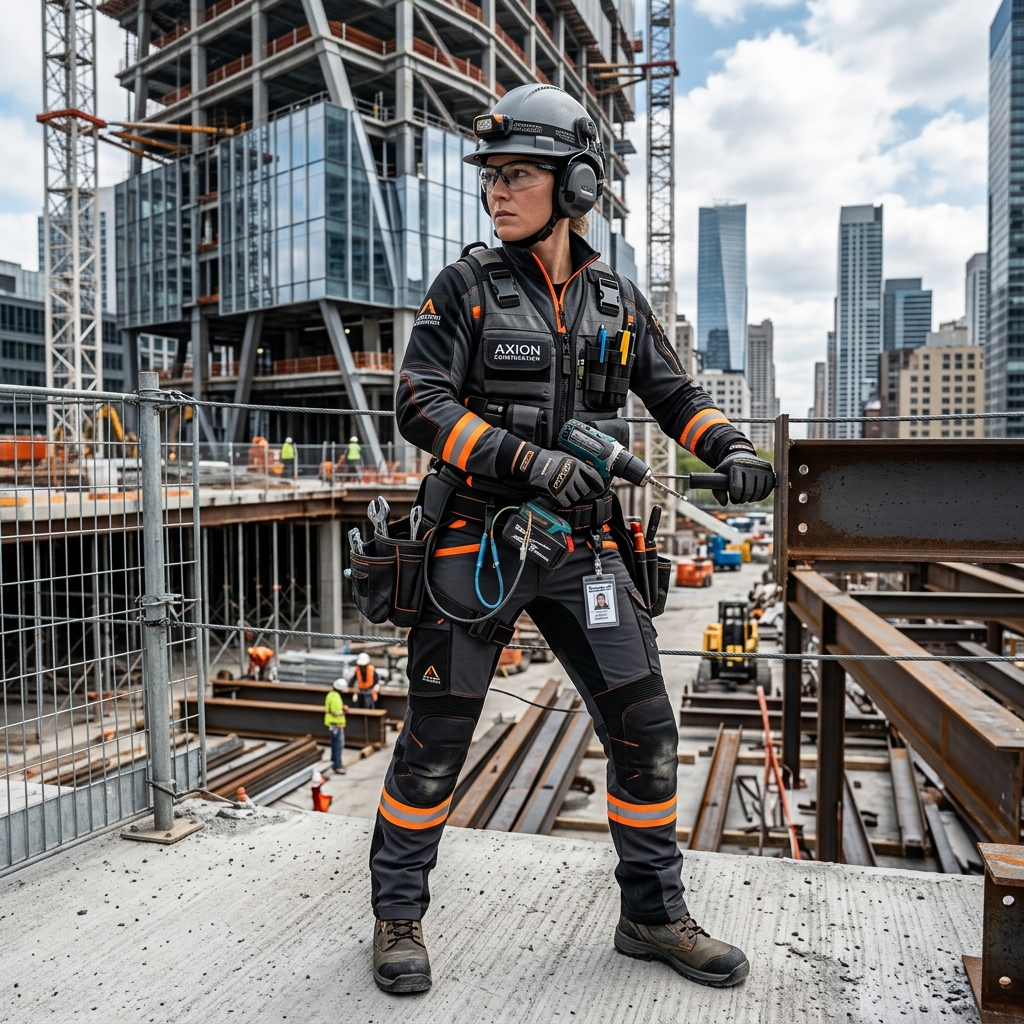
Ever seen a construction worker constantly adjusting an uncomfortable, bulky uniform? It’s a common sight. Workwear used to be just about basic protection and durability. But today, the game has changed. Companies are realizing that the right uniform isn’t just an expense; it’s a tool that can directly impact productivity, safety, and even employee morale.
Let’s explore the modern functionalities being added to company worker uniforms and how they are redefining the workplace.
1. Ergonomics: Built for Movement
Modern uniforms are designed with the human body in mind.
Old-school uniforms were often stiff and restrictive. Today’s designs incorporate ergonomic features like articulated knees and elbows, gusseted crotches, and stretch panels. This allows workers to climb, bend, and reach without the fabric pulling or restricting their movement, significantly reducing fatigue and the risk of strain-related injuries.
2. Smart Fabrics: Beyond the Basics
Fabric technology has leaped forward. We are no longer limited to just heavy canvas. Modern uniforms use:
- Moisture-Wicking: Pulls sweat away from the body to keep workers dry in humid conditions.
- Temperature Regulation: Fabrics that help maintain a steady body temperature in varying environments.
- Anti-Microbial: Reduces odors and keeps uniforms fresher for longer, especially important in active roles.
3. Enhanced Safety Features
Safety is no longer just about heavy boots. Modern uniforms integrate safety directly into the garment:
- High-Visibility Integration: Strategic placement of reflective materials that move with the body.
- Flame-Resistant (FR) Materials: Advanced fibers that are inherently flame-resistant, offering lightweight protection.
- Reinforced High-Wear Zones: Using materials like Cordura in knees and pockets for extreme durability.
4. Practicality for the Modern Worker
A uniform is a mobile workstation for many workers.
Pockets are no longer just an afterthought. Modern uniforms feature specialized pockets for smartphones, tablets, and specific tools, designed for easy access while wearing gloves or safety harnesses. Integrated knee pad pockets also allow workers to add protection only when needed.
By investing in these modern functionalities, companies are not just buying clothes; they are equipping their workforce with the tools needed to succeed in a demanding industrial landscape.
Frequently Asked Questions
How do ergonomic designs in uniforms improve productivity?
Ergonomic designs reduce physical strain and allow for a full range of motion, which prevents worker fatigue and enables them to perform their tasks more efficiently.
What are 'Smart Fabrics' in industrial uniforms?
Smart fabrics include materials that are moisture-wicking, anti-microbial, or even temperature-regulating, helping workers stay comfortable in harsh industrial environments.
Are modern uniforms more expensive for companies?
While the initial investment might be slightly higher, modern functional uniforms often last longer and reduce workplace injuries, leading to long-term cost savings.